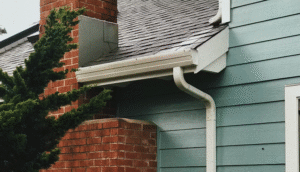
Most homeowners pay close attention to roof leaks, damp walls, or foundation cracks. But the slim channel running just below the roofline — the gutter — is often left unchecked. It doesn’t carry weight, doesn’t creak or groan, and yet, its condition can quietly shape the long-term integrity of the entire structure.

Gutters are passive systems. Their job is to collect and redirect rainwater, quietly and reliably. When they’re clogged, cracked, or sagging, the damage isn’t immediate — it builds. Over time, they can trigger a chain of problems: water seeping into walls, rotting eaves, eroding foundations. By the time you see the symptoms, the root cause has often been in place for years.
Why Gutters Need Maintenance: Built-in Exposure Means Built-in Risk
Gutters are exposed year-round — to sun, wind, rain, falling leaves, dirt, and debris. For a while, they keep working. But over time, blockages start forming, especially after a few seasons of neglect.
A single heavy rainstorm can overwhelm a blocked system. Water spills over, pushes back into roof seams, or seeps behind siding. By the time interior stains appear or mold sets in, the damage has already progressed far beyond the gutter itself. Regular maintenance helps catch this drift early.
Cleaning Is Just the Beginning — Inspection Is the Real Value
A professional guttering service isn’t just there to scoop out leaves. A thorough job includes checking for warping, slope misalignment, loose fasteners, aging joints, and drainage at the downspouts. Some of the most costly failures stem not from clogs — but from subtle disconnections and material fatigue.
Missed signs like a hairline gap in the corner joint or a slope that no longer flows properly can lead to water pooling and overflow. In areas with dense trees or high winds, systems are under constant strain. The more volatile the environment, the more attention your gutters require.
Sometimes Cleaning Isn’t Enough — Redesign May Be the Smarter Call
On older homes, the original gutter design may no longer be effective. It might have undersized pipes, poorly placed downspouts, or too many sharp turns — all of which slow water flow and raise overflow risk.
Quality service goes beyond cleaning. It starts with evaluation: does the current setup still make sense given your roof’s pitch, your local rainfall, or any renovations? Upgrades may include switching to corrosion-resistant materials, adding leaf guards, redirecting water flow, or reworking the slope. Maintenance solves symptoms; redesigns prevent them.
The Cost of Delay Isn’t Just a Damaged Pipe
When gutters fail, the issues they create are rarely confined to the exterior. Rotting woodwork, bubbling wall paint, waterlogged basement corners — these are slow consequences of persistent misdirection.
Many home insurance policies don’t cover damage caused by neglect or deferred maintenance. That means repair costs often come straight out of pocket. In contrast, regular checkups and minor fixes are inexpensive — and save you from future structural headaches.
Final Thoughts
A working gutter system doesn’t call attention to itself — but that’s exactly what makes it so easy to overlook. When it stops doing its job, the problems can escalate quickly and invisibly.
Routine cleanings, detailed inspections, and occasional upgrades aren’t just about keeping the edges of your roof tidy. They’re how you protect one of your home’s most essential defense systems. When your gutters are working properly, you rarely notice. And that’s the point.